
DISC Card Game
A Hands-on Team Building Activity That Builds Real Self-Awareness, Enhances Communication, and Develops Feedback, and Accountability
Discover how the DISC Card Game can transform your understanding of people. This card game not only offers enjoyment but also develops self-awareness and understanding of others’ behavioral styles. Join the fun and unlock essential insights.
Use it to build self-awareness, improve feedback, and grow accountability in any team.
The DISC Card Game is a practical, research-backed team building activity built on the globally trusted DISC behavioral framework. It is a fast and effective way to move a team from polite conversation to honest feedback, from surface-level agreement to shared accountability, and from abstract theory to observable behavior change.
Developed by Team8 People and Athlete Assessments, leaders in DISC Profiling across sport, business, and education, the DISC Card Game has been used by coaches, HR leaders, educators, and consultants around the globe to unlock better conversations inside teams.
Why Most Team Building Activities Fail
Most team building activities create energy, but not lasting change.
Research from Gallup shows that 70% of the variance in team engagement is attributable to the manager and the quality of team conversations.
Traditional team building usually falls short because it:
- Creates connection in the moment, but not shared language for the weeks that follow.
- Avoids the uncomfortable conversations around feedback, conflict, accountability, that actually move performance.
- Focuses on personality rather than observable behavior, so nothing becomes practical.
- Leaves the team without a repeatable tool or language to rehearse the skill under real-world pressure.
The DISC Card Game is designed to close this gap.
It pairs structured play with behavioral science, giving teams a simple, repeatable system for practicing, not just discussing, the behaviors that drive performance. Use the DISC Card Game to turn awareness into application, understanding into action, and engagement into accountability.
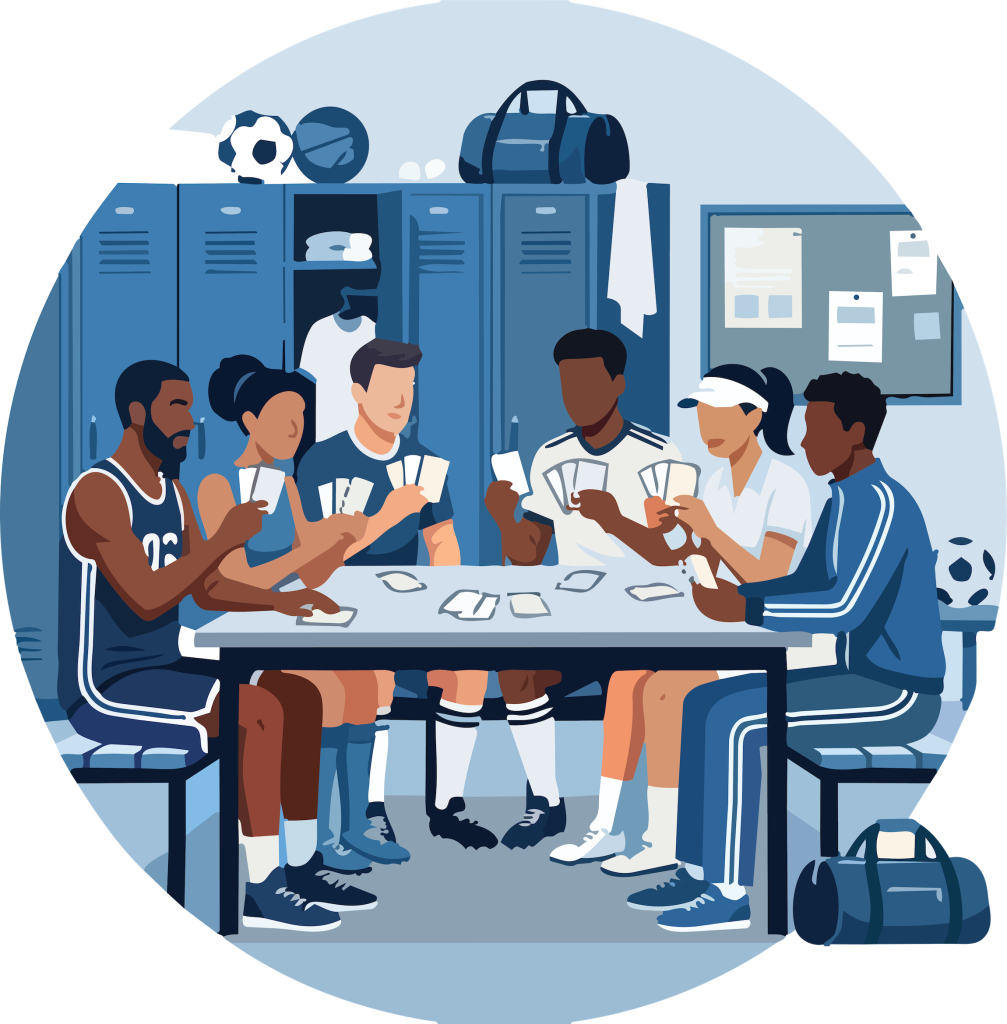
What the DISC Card Game Does for Your Team
Builds Team Chemistry — Fast
Trust is the foundation of every high-performing team. The DISC Card Game accelerates trust by surfacing behavioral differences in a low-stakes, structured format, so team members understand each other in a single session rather than over months.
Improves Communication Under Pressure
Communication breaks down first when stress rises. The game helps individuals recognize how their DISC style changes under pressure, and gives teammates a shared vocabulary to adapt in real time; on the field, in the boardroom, or in the classroom.
Develops Self-Awareness That Actually Translates
Research suggests that while 95% of people think they are self-aware, only about 10–15% actually are. The DISC Card Game closes that gap by giving participants specific, behavioral feedback from teammates, not a personality label, but observable data they can use.
Teaches Feedback as a Team Skill
Over the years, research has consistently found that teams who exchange feedback frequently outperform those who do not. Yet feedback remains one of the most underdeveloped capabilities inside most organizations. The DISC Card Game provides a structured, safe format to practice giving and receiving feedback.
Builds Genuine Accountability
Accountabiity is the behavior every high-performing team relies on and the one that most teams avoid. The DISC Card Game turns vague expectations into shared ownership by making each person’s behavioral commitments visible and discussable.
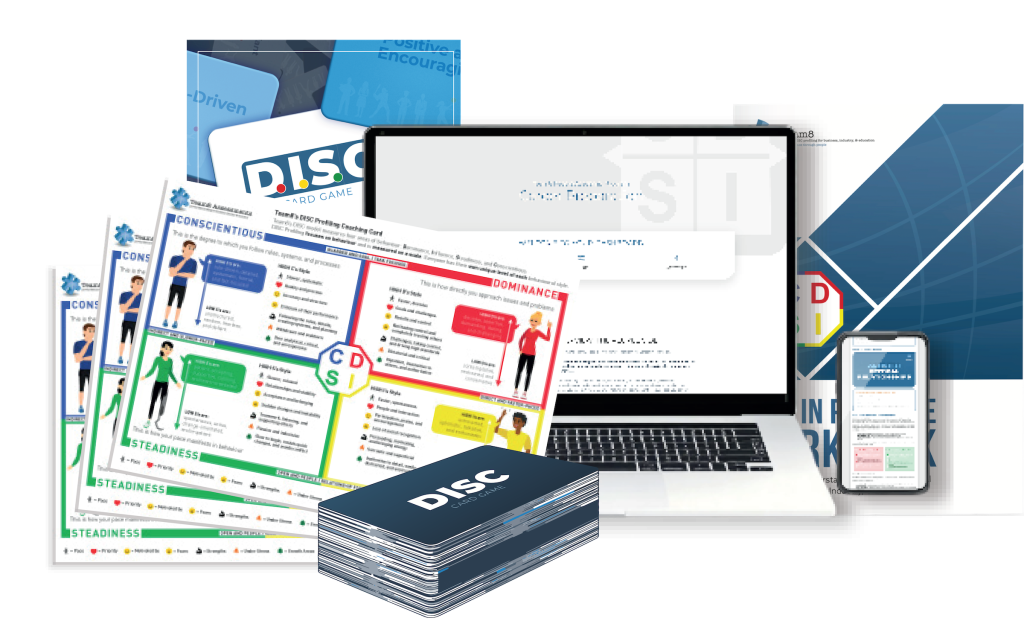
What Makes the DISC Card Game Different
High-performing teams consistently demonstrate three behaviors:
- They give honest, constructive feedback;
- they receive feedback without defensiveness;
- and they hold each other accountable to shared commitments.
These are rarely taught, and more often avoided. The DISC Card Game is deliberately designed to teach them through practical experience, not theoretical explanation.

How It Works
A Team Development Tool You Will Use Again and Again
Unlike a one-off workshop, the DISC Card Game is built for repeated use. It is used across sport, business, education, and coaching environments to onboard new members, reset an established team, coach individual behavior, and reinforce DISC Profiling outcomes over time.
How facilitators and groups use the DISC Card Game:
- In 15-minute daily stand-ups or meetings to reinforce a behavioral theme.
- As part of a team building, professional, or leadership development workshop to enhance engagement.
- As a coaching tool between one manager and one team member.
- Alongside individual DISC Profiles from Team8 People or Athlete Assessments.
- As a pre-season ritual for sports teams building new chemistry.
1
Play
Participants engage with DISC-based behavioral cards in a structured activity that surfaces how each person prefers to communicate, decide, lead, and respond to pressure.
2
Discuss
Guided conversations, supported by included DISC Coaching Cards, bring communication styles, differences, and patterns to life. This is where awareness becomes shared language.
3
Apply
Teams practice real feedback, real accountability, and real communication in scenarios drawn from their own world. This is the step most team building activities skip, and the reason the DISC Card Game creates change that lasts.
The Feedback & Accountability Framework
The DISC Card Game is built on a simple, proven structure:
Awareness
Understand DISC behavioral styles and communication tendencies.
Recognition
Identify how behaviors show up in real team situations.
Feedback
Practice giving and receiving specific, behavioral feedback that lands.
Accountability
Translate insight into clear expectations and shared ownership.
This framework is the reason the DISC Card Game outperforms generic team building activities: every session ends with behavior commitments, not just good conversations.
Why Feedback and Accountability Are So Hard — And How the Game Helps
Most teams struggle with feedback and accountability because:
- feedback feels personal and uncomfortable
- there is no shared language for behavior
- people avoid conflict to protect relationships
- expectations are not clearly defined
Without structure, these conversations either don’t happen, or cause additional stress or conflict.
The DISC Card Game provides a neutral, behavioral framework that makes these conversations:
- easier to give and hear
- clearer and more specific
- more productive and immediately applicable.
When paired with the use of Athlete Assessments’ or Team8 People’s DISC Profiles, it becomes even more effective as the understanding of DISC dives deeper. Instead of someone saying “you are too direct,” feedback becomes more impactful “your high-D style drives results which was great for getting us moving and keeping us outcome oriented, however on this project it overran the high-S voices we needed to work through the details and ensure everyone felt included.” That is a conversation a team can actually have.
What Is DISC and Why It Matters
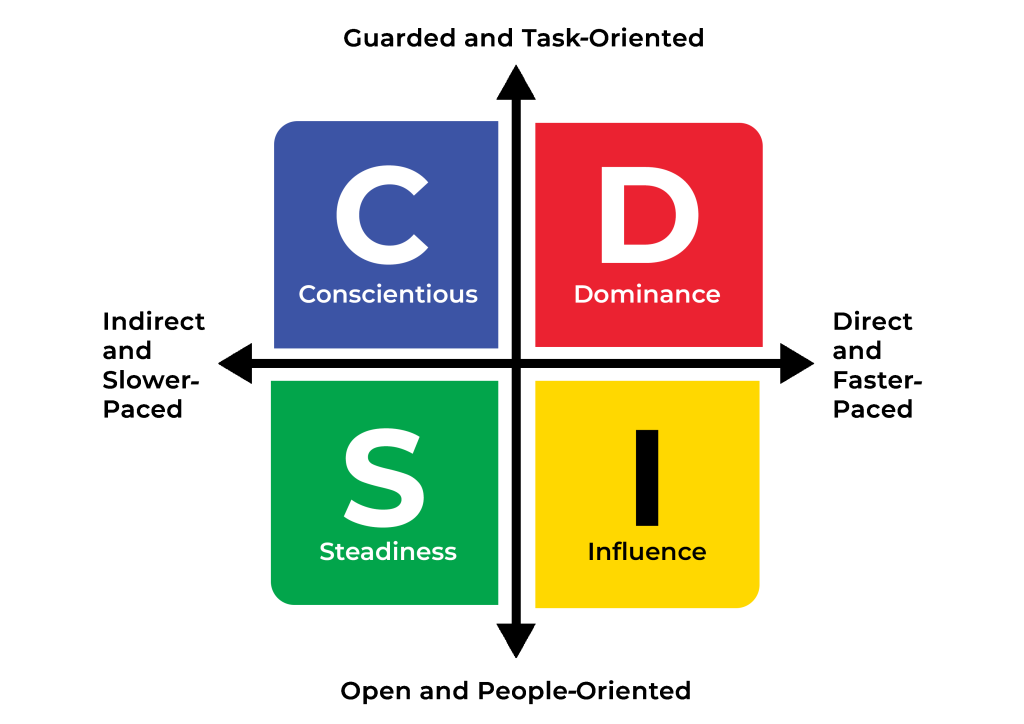
DISC is a behavioral framework that measures four observable tendencies: Dominance, Influence, Steadiness, and Conscientious. Unlike personality tests that try to box people in, DISC focuses on how people behave; which can be observed, adapted, and coached.
When applied inside a team, DISC improves communication, reduces conflict, builds trust, and gives the team a shared language for stronger collaboration. Many of our clients use the DISC Card Game to deepen the application of Team8 People and Athlete Assessments DISC Profiles, turning individual reports into team behavior change.
No DISC Experience Required
Designed as a tool to introduce the theory and model of DISC Profiling, You don’t need prior DISC knowledge to use the DISC Card Game. The structure naturally introduces behavioral styles, communication patterns, and feedback conversations, providing a foundation for developing self-awareness and team collaboration. This makes it ideal for facilitators, coaches, educators, or groups looking for a team building tool, a communication activity, a leadership development solution, or an ongoing tactile tool they can bring to any session, with any group.